Lebanon is facing one of the gravest moments in its modern history. Hezbollah’s decision to launch attacks into Israel, in response to Iranian demands and under the direction of the Iranian Revolutionary Guard Corps (IRGC), has drawn Lebanon deeper into the regional conflict, once again exposing the country to devastating Israeli retaliation and placing millions of civilians at risk.
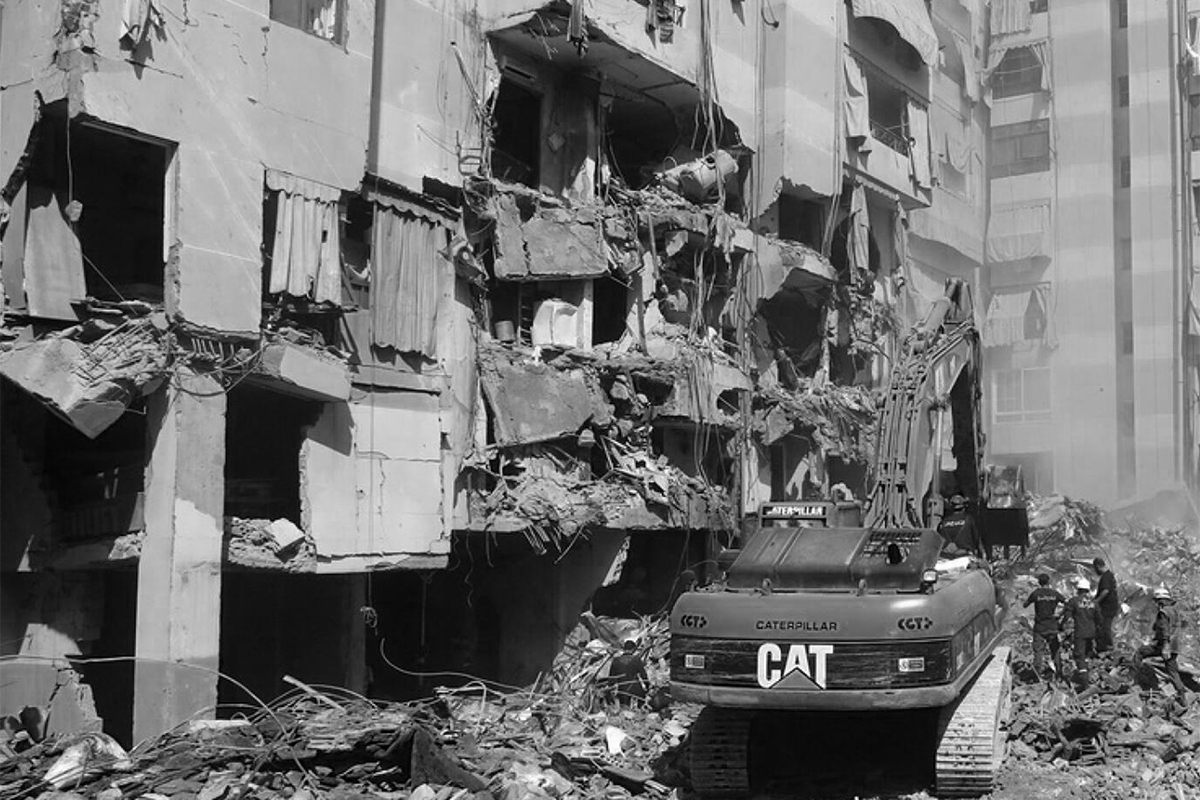
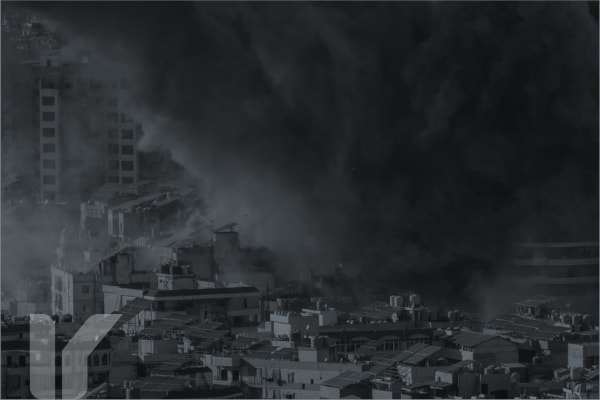
At the same time, Israel’s escalating bombing campaign and ground operations are inflicting enormous human and material costs across the country. Nearly 20% of the Lebanese population is now displaced, and the area south of the Zahrani has been almost entirely emptied. The scale of violence and war crimes being committed is catastrophic for Lebanon’s social fabric, economy, and already fragile prospects for recovery.
The country is now at a decisive moment. The way its authorities act will determine the viability of the state and the country’s territorial integrity. So far, Lebanese authorities have taken two significant decisions: banning Hezbollah’s military activities and proactively proposing direct negotiations with Israel. These decisions must now be followed by concrete and visible steps to restore the state’s monopoly over arms and lay the groundwork for serious negotiations, aimed at bringing the conflict with Israel to a lasting end.
- THE GOVERNMENT SHOULD FOLLOW THROUGH ON ITS BAN ON HEZBOLLAH’S MILITARY ACTIVITIES
The government should follow through on the long-overdue ban through concrete steps aimed at curbing Hezbollah’s military and financial structures and halting Iranian interference in Lebanon, particularly after breaking with its previous passivity regarding Iranian actions in the country.
- Request that the Lebanese Armed Forces (LAF) present a new operational plan aligned with the government’s latest decision. This plan should set clear priorities, identify areas of deployment, and establish a realistic implementation timeline.
- Follow through on military tribunal decisions and other legal measures targeting individuals engaged in illegal military activity on Lebanese territory. The issue is no longer the adoption of formal decisions, but their consistent enforcement.
- Suspend the activities of Al-Qard al-Hassan and place its functions under state supervision in accordance with Lebanese law, paired with a state-led financial alternative to reintegrate all citizens within the regulated financial system. In parallel, intensify efforts to curb the cash economy that enables Hezbollah’s financial activities, including through long-delayed banking sector reforms.
- Request that the Lebanese Armed Forces (LAF) present a new operational plan aligned with the government’s latest decision. This plan should set clear priorities, identify areas of deployment, and establish a realistic implementation timeline.
- THE LEBANESE AUTHORITIES CANNOT ADDRESS HEZBOLLAH’S DISARMAMENT ALONE. THEY NEED TO SECURE INTERNATIONAL SUPPORT
Lebanon’s institutions, including the army, do not currently have the capacity to dismantle Hezbollah’s entire infrastructure overnight, but they must clearly begin moving in that direction. This comes at a particularly important juncture: domestic support for Hezbollah’s disarmament is strong, while its regional room for maneuver is increasingly constrained.
In the immediate term, the LAF should launch an enforceable process that translates the state’s political intent into action, with international political cover. A central component should be the redeployment of the LAF in critical areas, including the Southern Suburbs of Beirut, to secure these areas, establish visible and sustained state presence, protect key access points, and begin asserting control over security coordination, and suppressing unauthorized armed activity. A phased expansion of these deployments should follow, extending to other critical areas and border zones, to demonstrate that the state is progressively reclaiming operational control over its territory.
In parallel, Lebanon should seek backing from its partners to be able to achieve its disarmament plan within the context of a new security arrangement. The state should seek U.S., European, and GCC support to bolster LAF capacity, expand its deployment, and reinforce its resources. The current information sharing and coordination ‘Mechanism’ set after the November 2024 ceasefire agreement must be upgraded, allowing for the implementation of an enhanced security arrangement, including monitoring compliance, supporting implementation, and providing credible oversight.
This international support should be tied, on one hand, to a clear plan, strict timelines, and well-defined deliverables. On the other hand, it should be linked to targeted political, economic, and security assistance to support Hezbollah’s disarmament, reinforce sovereignty, and advance the reforms needed to rebuild state credibility.
To make this possible, LAF leadership must demonstrate an unequivocal commitment to the disarmament process, in full alignment with the executive authority, including through regular and transparent reporting. Firm leadership at the helm of key security institutions is also needed to contain any internal divergence and ensure coherence in implementation.
- THE DIPLOMATIC TRACK PROPOSED BY LEBANON IS A SIGNIFICANT STEP THAT MUST NOW BE STRUCTURED AND PURSUED SERIOUSLY
The Lebanese authorities’ proposal to engage in direct negotiations with Israel is the most significant step taken so far. But this opening will only be credible if it is matched by visible steps to restore state authority and demonstrate that the Lebanese leadership can implement the commitments it undertakes.
The immediate priority must be to secure a cessation of hostilities. Negotiations should then focus on preventing a prolonged Israeli military presence or a new occupation dynamic, securing guarantees for the safe return of displaced populations to their towns and villages, and ending repeated violations. This track should be linked to a framework through which the Lebanese state prohibits unauthorized military activity and commits to reasserting full authority over its territory. In that sense, negotiations are not an alternative to disarmament, but one channel through which it can be anchored and translated into a more durable security and political arrangement.
That arrangement should go beyond temporary deconfliction measures. It should address unresolved border issues, including border demarcation, as well as the legal and security arrangements needed to prevent renewed escalation and establish a permanent cessation of hostilities. If pursued properly, this track could gradually build a structured path out of perpetual warfare and toward more stable and durable relations between the two countries.
For Lebanon to negotiate effectively, the process must benefit from clear alignment among the Lebanese leadership, and be managed exclusively by the constitutional authorities of the state, with a clear mandate, a coherent team, and strong political backing. No internal actor should be allowed to veto or capture it. This will require both internal discipline and external support. Lebanon should secure guarantees from its partners to strengthen the state’s position at the table and ensure that negotiations are not conducted under unchecked military coercion. If managed properly, this process can help Lebanon halt the current destruction, reclaim political initiative, and open a path toward a more stable security order.
- PRESERVING SOCIAL COHESION IS ESSENTIAL THROUGHOUT THIS PROCESS
As the state navigates these critical security and diplomatic challenges, preserving social cohesion and containing communal tensions will be essential. With nearly 20% of the population displaced, social needs are acute, demographic fears are rising, the social fabric is under severe strain, and hate speech is spreading widely. The state must reassert its presence and protect the interests of its citizens.
The government must mobilize the financial resources needed to provide relief, social support, and basic services. This is essential not only to alleviate suffering, but also to rally citizens around the state at a time of profound dislocation and prevent further civil fragmentation in the period ahead.
Internal Security Forces must be deployed, starting with a full deployment in Beirut, and prepared for a range of scenarios, from sporadic security incidents to internal strife. Those spreading hate speech, especially when it amounts to incitement to murder, must be held accountable.
It is equally important to maintain a minimum level of cohesion within the state apparatus. If the central state collapses entirely, Lebanon risks descending into years, if not decades, of chaos.
Breaking the cycle of hostilities in Lebanon requires both a realistic negotiation framework and the restoration of credible Lebanese state authority capable of enforcing security decisions on its own territory. Lebanese leaders must act now, regardless of regional shifts or the trajectory of the U.S.-Israeli war with Iran. The moment is critical, and the risks of further deterioration are many. However, with genuine commitment from the Lebanese authorities, and serious support from the international community, a breakthrough is still possible; one that would disarm Iran’s most significant proxy, restore stability in Lebanon, and lay the foundations for a lasting end to hostilities between Lebanon and Israel.